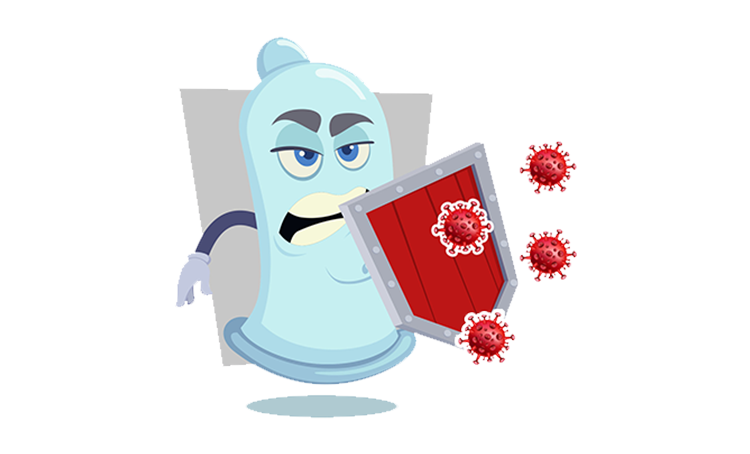
A condom is a protective covering worn during sex as a form of contraception to help prevent pregnancy and reduce the risk of acquiring or transmitting sexually transmitted infections (STIs).
When used correctly every time, condoms are highly effective at preventing HIV and many other STIs and are effective at preventing pregnancy.
They greatly reduce the risk of many STIs, including HIV.
Yes, especially if you do not know each other's HIV or STI status.
Yes. Condoms can be used together with other methods for extra protection.
Yes. Choosing the correct size helps improve comfort and reduces the chance of slipping or breakage.
Yes. Some people are allergic to condoms made from latex. Non-latex condoms are available as an alternative.
Check that the package is sealed, not damaged, and that the condom has not expired.
No. Expired condoms are more likely to break.
Store them in a cool, dry place away from direct sunlight and sharp objects.
Yes. But it is better to avoid keeping it there for a long time because heat and friction may damage it.
Open the package carefully using your fingers around the rough edge (zigzag). Avoid using your teeth, scissors, or any sharp objects that can damage the condom.
Before any sexual contact begins.
Male condoms should be worn on an erect penis. When wearing, hold the tip to make it airtight. It should be rolled on the erect penis up to the base.
Use only water-based or silicone-based lubricants with latex condoms. Oil-based products can damage latex condoms.
No. Oil-based products such as Vaseline and Petroleum Jelly break down latex rapidly, causing the condom to tear.
Avoid aggressive penetration or thrusting, as this could lead to the condom breaking or removing.
Yes. If not worn correctly or the wrong size is used. Loss of erection can also make condoms slip off.
Apply water-based lubricants. Do not use saliva as this may cause infection.
No. Using two condoms together can cause friction and make them more likely to break.
Stop having sex immediately, replace it with a new condom, and seek medical advice if there is a risk of pregnancy or HIV exposure.
After ejaculation the penis gets soft and so it is advisable to pullout in order to avoid spillage of semen.
Withdraw carefully, use paper tissue to roll it off, and dispose appropriately to prevent spills.
No. Condoms should never be reused; use a new condom for every round of sex.
Tie it off or wrap it up and put it in a dustbin. It may also be buried (preferable). Do not flush in a water closet (WC). Wash your hands afterwards.
To some extent, condoms may interfere with sexual pleasure. However, it is safer to use a condom in order to prevent STIs or unintended pregnancy.